Workers get injured every year not because equipment fails—but because it’s accidentally re-energized during maintenance. A sample of log out and tag out isn’t just paperwork. It’s a procedural blueprint that prevents fatalities, ensures compliance, and protects teams from unexpected startup of machinery.
The terms "log out" and "tag out" are often used interchangeably with "lockout/tagout" (LOTO), but in practice, a true LOTO program includes both physical locks and visible tags—combined with documentation. A sample procedure demonstrates how to systematically isolate energy sources, verify de-energization, and communicate control across shifts and teams.
This article breaks down a real-world sample of log out and tag out, explains its components, and shows how to implement it effectively—without cutting corners.
What Is a Sample of Log Out and Tag Out?
A sample of log out and tag out is a documented example of how a facility isolates equipment from all hazardous energy sources before service or maintenance. It includes step-by-step instructions, roles, verification methods, and communication protocols.
Unlike vague policies, a strong sample:
- Matches specific machinery
- Lists all energy types (electrical, hydraulic, pneumatic, chemical, gravitational)
- Assigns accountability
- Includes verification steps
- Aligns with OSHA 29 CFR 1910.147
For example, a packaging line in a food processing plant may require shutting down a conveyor system. A sample procedure would detail exactly which breakers to flip, where to apply locks, what tags to use, and how to test for zero energy.
Common mistake: Using a generic LOTO template without adapting it to the machine or workplace. That creates false confidence—and real risk.
Why a Real Sample Beats a Generic Template
Templates are starting points. But real safety happens in the details.
Consider two facilities using the same "standard" LOTO form:
- Facility A copies the template word-for-word. During maintenance, a worker assumes a valve is closed. It isn’t. Pressure releases, causing injury.
- Facility B customizes the sample to its die press machine. The procedure specifies: "Close hydraulic isolation valve #3, verify pressure gauge reads 0 psi, lock valve handle, attach tag with technician name and time." The system works.
A sample gains value when it reflects:
- Machine-specific energy points
- Clear shutdown sequences
- Verification steps (e.g., "test for dead" using a multimeter)
- Authorized personnel roles
- Shift handover instructions
Without these, even a "complete" form is just compliance theater.
Core Components of a LOTO Sample Procedure An effective sample includes these non-negotiable elements:
1. Equipment Identification Clearly name and locate the machine. Use labels, IDs, or photos.
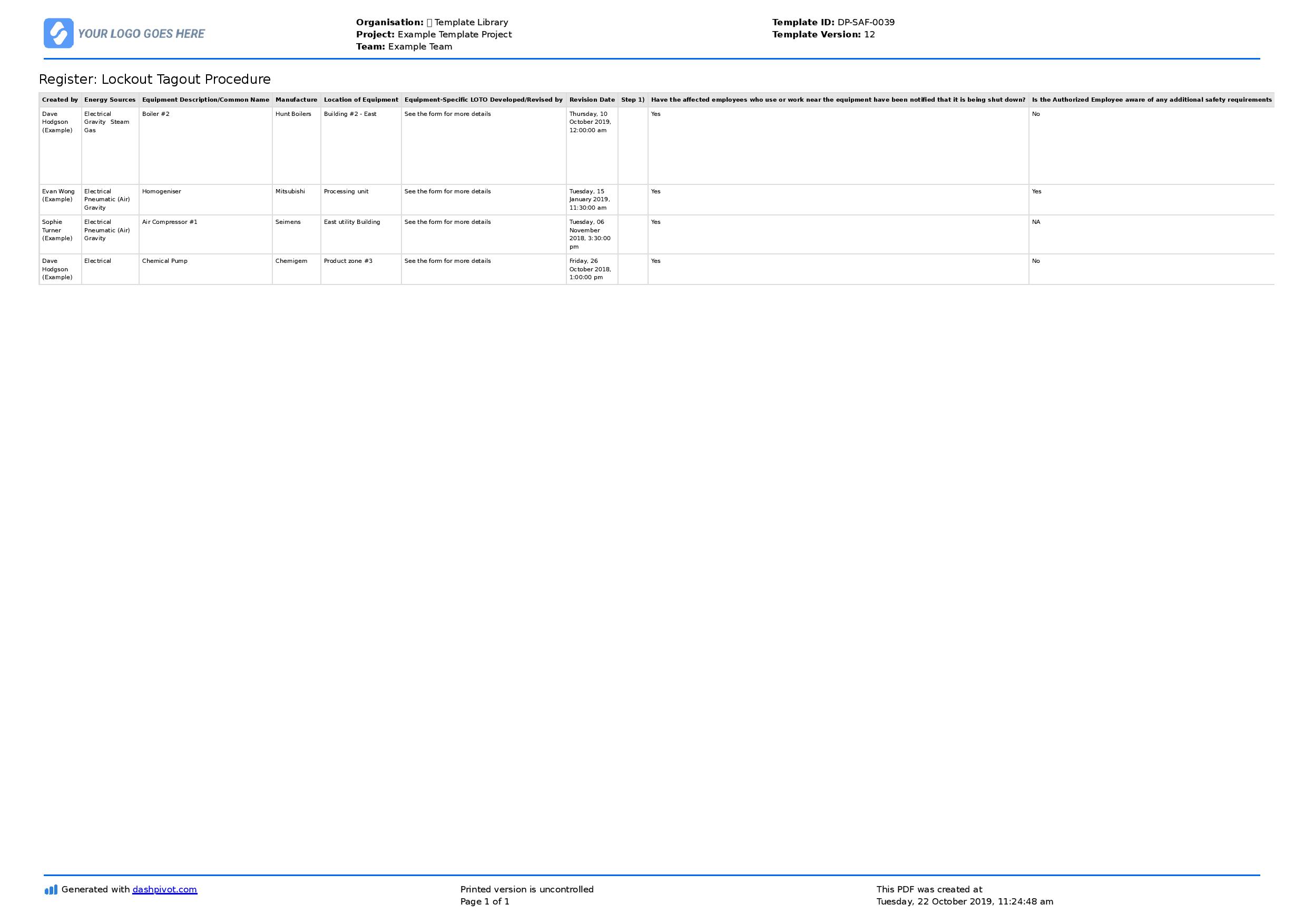
Example: “Conveyor System C-Line-7 – Located in west processing wing, between stations 4 and 5.”
2. Energy Source Inventory List every type of energy involved:
| Energy Type | Source Example |
|---|---|
| Electrical | 480V main breaker |
| Pneumatic | Compressed air line to cylinder |
| Hydraulic | Pump reservoir at 1,200 psi |
| Gravitational | Raised platform with 500 lb load |
| Chemical | Ammonia refrigerant line |
3. Step-by-Step Shutdown Use active, imperative language:
- Notify operations that maintenance is beginning.
- Press emergency stop button.
- Open disconnect switch at Control Panel CP-3.
- Close isolation valve HV-205.
- Lower suspended components using manual release.
4. Application of Locks and Tags Specify:
- Who applies each lock
- Lock type (e.g., keyed padlock, group lockbox)
- Tag content: Name, department, time, reason
Tag example: “DO NOT OPERATE – Maintenance in progress. John Rivera, Maintenance Tech #12. Started: 09:15 AM.”
5. Verification of Isolation
This is where most failures occur. A sample must include:
- “Test for zero energy” steps
- Use of test instruments (e.g., voltage tester)
- Confirmation method (e.g., attempt to start machine)
Example: “After lock application, use a CAT III multimeter to confirm 0V at motor terminal block.”
6. Clear Release and Restart Protocol Define how and when to remove locks:
- Only the original lock owner removes their lock
- Group locks require supervisor verification
- Final inspection before re-energizing
Real-World LOTO Sample: Hydraulic Press Machine
Here’s a condensed but realistic sample for servicing a 50-ton hydraulic press.
Equipment: Model HP-5020 Hydraulic Press, Station B-3 Hazardous Energies: Electrical (480V), Hydraulic (1,500 psi), Mechanical (flywheel), Gravitational (200 lb ram)
Step 1: Preparation
- Notify supervisor and operations team.
- Retrieve LOTO kit: 1 padlock, 1 danger tag, multimeter, pressure gauge.
Step 2: Machine Shutdown
- Press E-Stop.
- Rotate mode selector to “OFF.”
- Open main disconnect switch at Panel DP-7.
Step 3: Isolate Energy Sources
- Lock disconnect switch with personal padlock.
- Close hydraulic isolation valve (HV-12), verify pressure gauge reads 0 psi.
- Engage mechanical lock on flywheel.
- Lower ram fully using manual bleed valve.
Step 4: Apply Tags
- Attach tag to each lock:
- “LOCKED OUT – Technician: Maria Lopez, Maintenance. Time: 10:03 AM. Reason: Cylinder seal replacement.”
Step 5: Verify Zero Energy
- Test for voltage at control circuit: Confirm 0V using multimeter.
- Attempt to start machine via control panel: No response = verified.
- Visually confirm ram is resting on base.
Step 6: Perform Maintenance
- Begin seal replacement.
- No bypassing of locked components.
Step 7: Release and Restart
- Clean work area.
- Confirm all tools removed.
- Technician removes personal lock.
- Supervisor authorizes restart.
- Energize system slowly, monitor startup.
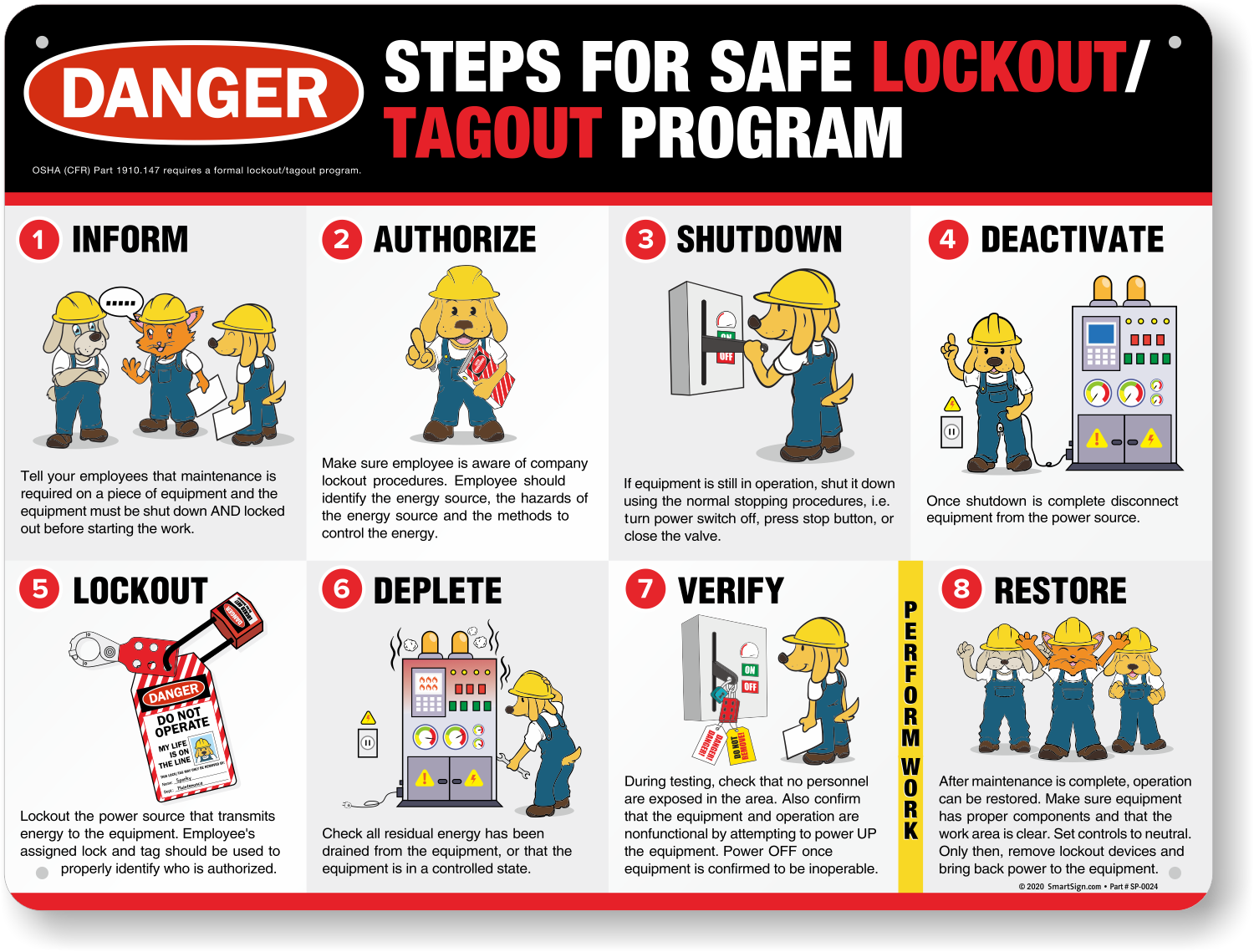
This sample isn’t theoretical—it’s derived from OSHA-compliant practices used in manufacturing plants.
Common Mistakes in LOTO Procedures
Even with a solid sample, real-world execution often fails due to:
1. Skipping Verification Workers assume “if it’s off, it’s safe.” But stored energy can linger. Always verify.
2. Using “Group Lockout” Without Controls In team maintenance, a lockbox system is essential. Each worker applies their lock. No single person can restart.
3. Poor Tag Quality Faded, handwritten, or missing tags defeat the purpose. Use durable, standardized tags with key fields.
4. Incomplete Training Only “authorized employees” should perform LOTO. Yet many facilities train everyone the same—watering down accountability.
5. No Procedure Updates
When machines change, LOTO procedures must too. Outdated samples create dangerous gaps.
How to Build Your Own LOTO Sample Start with a template—but finish with customization.
Step 1: Audit the Machine Walk the equipment. Identify every energy source. Take photos.
Step 2: Write the Steps Use plain language. Number each action. Include warnings.
Warning: Failure to bleed hydraulic pressure may result in uncontrolled ram movement.
Step 3: Test the Procedure Have an authorized employee follow the sample during a planned shutdown. Refine based on gaps.
Step 4: Document and Train Store the finalized sample in the safety manual. Train all relevant staff. Require sign-off.
Step 5: Review Annually Even if nothing changed, review once a year. Update as needed.
Tools and Resources for Effective LOTO
While LOTO is procedural, tools support consistency:
| Tool | Purpose | Best For |
|---|---|---|
| Lockout Hasp | Allows multiple locks on one isolation point | Group maintenance |
| Danger Tags | High-visibility warning labels | Clear communication |
| Lockout Kits | Portable kits with locks, tags, hasps | Mobile technicians |
| LOTO Management Software | Digital tracking of lock applications | Large facilities |
| Verification Meters | Voltage and pressure testers | Safe verification |
Digital platforms like LockOut TagOut Pro, iAuditor, or FACILITeCH help track lock usage, generate reports, and audit compliance—especially useful for plants with rotating shifts or complex equipment.
But remember: no tool replaces a well-written, machine-specific sample.
Final Thoughts: A Sample Is a Lifeline
A sample of log out and tag out is more than a compliance document. It’s a checklist that enforces discipline, protects lives, and prevents costly downtime from accidents.
Use a real-world sample as a model. Customize it to your equipment. Train rigorously. Verify every time.
Safety isn’t a formality. It’s a sequence of deliberate actions—each one documented, each one followed.
Start with a strong sample. Refine it relentlessly. Make it part of your operational DNA.
Frequently Asked Questions
What’s the difference between log out and tag out? "Log out" typically refers to recording shutdown activities, while "tag out" means placing a visible warning tag. In practice, both are part of lockout/tagout (LOTO), which includes physical locks, tags, and documentation.
Who can perform a lockout/tagout procedure? Only authorized employees trained in energy control procedures should perform LOTO. Affected employees (operators) must understand the process but not execute it.
Can a tag alone be used instead of a lock? Only if the lock can’t be applied and a documented exception exists. Tags alone are less secure and must be supplemented with additional safety measures.
How often should LOTO procedures be reviewed? At least annually, or whenever equipment, processes, or personnel change significantly.
What happens if someone removes a lock too soon? It’s a serious safety violation. Restarting energized equipment can lead to injury, disciplinary action, and OSHA penalties.
Are digital LOTO systems reliable? Yes, when properly implemented. They enhance tracking and accountability but must still align with OSHA standards and include physical locks.
Do LOTO procedures apply to corded electric tools? Yes. Even small equipment requires isolation. For plug-connected devices, unplugging and locking the plug or disconnect is sufficient.
FAQ
What should you look for in Sample of Log Out and Tag Out Procedures Explained? Focus on relevance, practical value, and how well the solution matches real user intent.
Is Sample of Log Out and Tag Out Procedures Explained suitable for beginners? That depends on the workflow, but a clear step-by-step approach usually makes it easier to start.
How do you compare options around Sample of Log Out and Tag Out Procedures Explained? Compare features, trust signals, limitations, pricing, and ease of implementation.
What mistakes should you avoid? Avoid generic choices, weak validation, and decisions based only on marketing claims.
What is the next best step? Shortlist the most relevant options, validate them quickly, and refine from real-world results.